

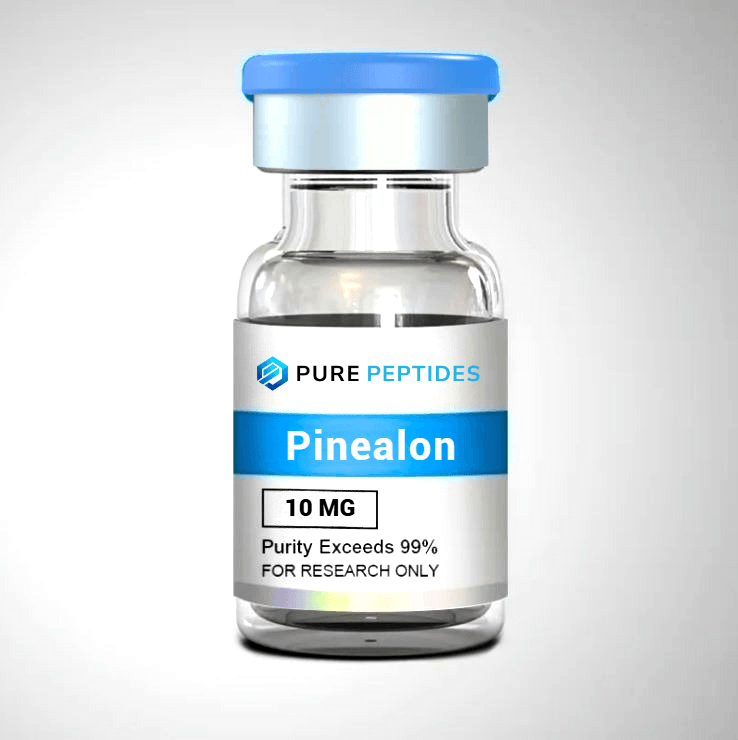
Overview
Pinealon is a synthetic tripeptide (Glu-Asp-Arg) developed as a short, biologically active analog mimicking pineal gland regulatory functions. It readily crosses the blood-brain barrier and is widely used in laboratory and preclinical research as a model compound to investigate neuroprotection, synaptic plasticity, cognitive performance, and age-related neuronal decline in various in vitro and animal model systems.
Research Applications (Observational Data from Published Studies) The following points summarize observations reported in scientific literature from preclinical (in vitro/animal) and human studies and are provided solely for informational and research-planning purposes:
- Neuroprotection Research: In rodent models of oxidative stress, hypoxia, and excitotoxicity, Pinealon reduced neuronal apoptosis, lowered lipid peroxidation, and protected hippocampal and cortical neurons.
- Cognitive Function and Memory Models: In aged rats and scopolamine-induced amnesia models, Pinealon administration improved spatial memory, learning ability, and long-term potentiation while normalizing BDNF and NGF levels.
- Anti-Aging and Brain Aging Studies: In accelerated-aging rodent models and old animals, chronic Pinealon treatment restored cognitive performance, reduced age-related neuronal loss, and improved cerebral blood flow.
- Stress and Anxiety Models: In rodent elevated plus-maze and open-field tests, Pinealon exhibited anxiolytic-like effects and normalized stress-induced alterations in serotonin and GABA systems.
Important Legal Disclaimer For laboratory research use only. Not for human or veterinary use. Not for diagnostic, therapeutic, cosmetic, or food purposes. Not approved by the FDA or any regulatory agency. Researchers are responsible for compliance with all applicable laws and institutional guidelines.
Chemical Information
- Sequence: Glu-Asp-Arg (EDR)
- Common Name: Pinealon, Pineal tripeptide
- Molecular Formula: C₁₅H₂₆N₆O₈ (often listed as C₁₄H₂₄N₆O₇ for free acid form)
- Molecular Weight: 402.40 g/mol (common salt form); 388.38 g/mol (free acid)
- CAS Number: 144460-18-8
- PubChem CID: Not widely assigned (research peptide)
Loading...