

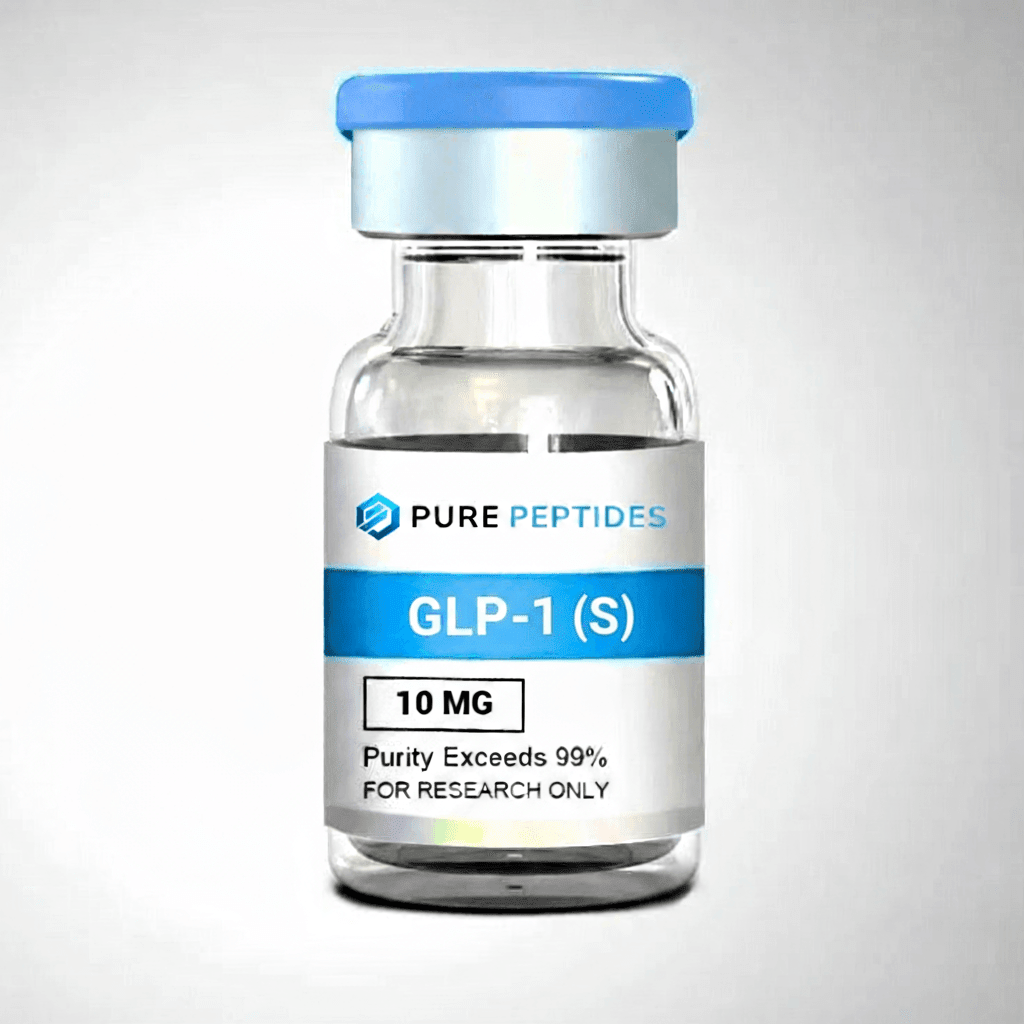
Overview
GLP-1 (S) is a synthetic 30-amino-acid peptide analog of human GLP-1(7–37) with substitution of α-aminoisobutyric acid (Aib) at position 8, arginine at position 34, and acylation of Lys²⁶ with a C18 fatty diacid chain via a γ-glutamyl spacer. It acts as a selective, long-acting agonist at the GLP-1 receptor and is widely used in laboratory and preclinical research as a model compound to investigate glucose-dependent insulin secretion, appetite regulation, gastric emptying, cardiovascular effects, and related GLP-1 receptor-mediated signaling pathways in various in vitro and animal model systems.
Research Applications (Observational Data from Published Studies) The following points summarize observations reported in scientific literature from preclinical (in vitro/animal) and human clinical trials and are provided solely for informational and research-planning purposes:
- Glucose Homeostasis Models: In diabetic and obese rodent models (db/db, DIO, ZDF rats), non-human primates, and multiple Phase 3 human trials (STEP and SUSTAIN programs), GLP-1 (S) administration has markedly improved glucose tolerance, increased glucose-dependent insulin secretion, suppressed glucagon release, lowered fasting plasma glucose, and reduced HbA1c by up to -2.4% (weekly subcutaneous 2.4 mg dose).
- Weight Regulation Research: In diet-induced obese rodent models, non-human primates, and Phase 3 human trials (STEP 1–10), GLP-1 (S) has produced substantial body-weight reduction (up to -17.4% mean weight loss at 2.4 mg weekly subcutaneous dose after 68 weeks) primarily through reduced energy intake, delayed gastric emptying, and enhanced satiety signaling.
- Cardiovascular and Lipid Metabolism Studies: In preclinical models and large cardiovascular outcome trials (SUSTAIN-6, PIONEER-6, STEP-HFpEF), GLP-1 (S) has consistently lowered triglycerides, total cholesterol, LDL-cholesterol, and blood pressure while demonstrating a 26% reduction in major adverse cardiovascular events (MACE) in patients with type 2 diabetes and high CV risk.
- Neuroprotective Research: In vitro neuronal cultures, rodent models of Alzheimer’s and Parkinson’s disease, and exploratory human imaging studies, GLP-1 (S) has shown reduction of neuroinflammation, decreased amyloid-beta and tau pathology, and improved cognitive markers.
Important Legal Disclaimer For laboratory research use only. Not for human or veterinary use. Not for diagnostic, therapeutic, cosmetic, or food purposes. Not approved by the FDA or any regulatory agency. Researchers are responsible for compliance with all applicable laws and institutional guidelines.
Chemical Information
- Sequence: His-Aib-Glu-Gly-Thr-Phe-Thr-Ser-Asp-Val-Ser-Ser-Tyr-Leu-Glu-Gly-Gln-Ala-Ala-Lys[(C18 diacid-γGlu-2×OEG)]-Glu-Phe-Ile-Ala-Trp-Leu-Val-Arg-Gly-Arg-Gly-OH
- Common Name: NN9535, GLP-1 (S)
- Molecular Formula: C₁₈₇H₂₉₁N₄₅O₅₉ (lipidated form)
- Molecular Weight: 4113.64 g/mol
- CAS Number: 910463-68-2
- PubChem CID: 56843331
Loading...