

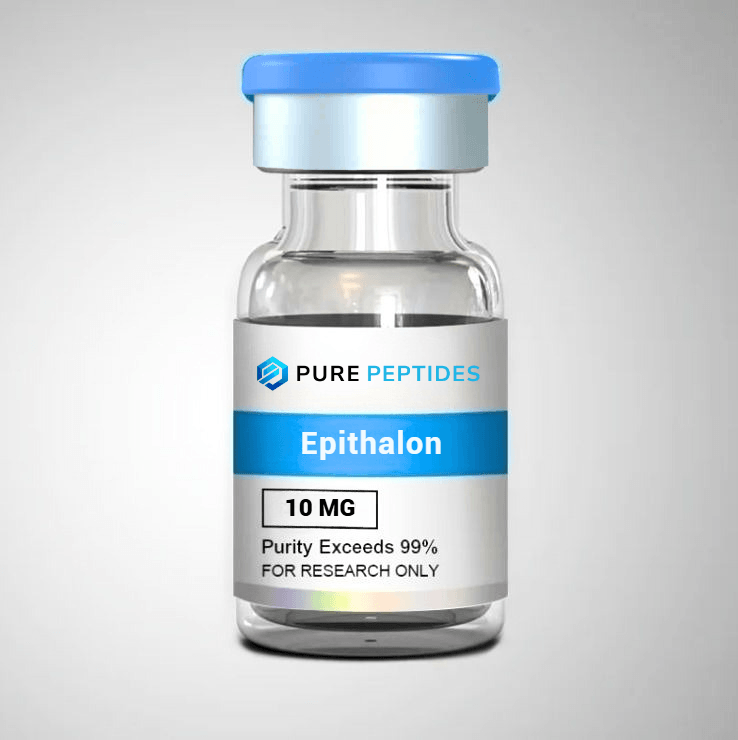
Overview
Epitalon (also known as Epithalon or AEDG peptide) is a synthetic tetrapeptide (Ala-Glu-Asp-Gly) that mimics the active core of epithalamin, a natural polypeptide extracted from bovine pineal gland. It is widely used in laboratory and preclinical research as a model compound to investigate telomerase activation, telomere maintenance, pineal gland function, circadian regulation, and cellular senescence pathways in various in vitro and animal model systems.
Research Applications (Observational Data from Published Studies)
The following points summarize observations reported in scientific literature from preclinical (in vitro/animal) and human studies and are provided solely for informational and research-planning purposes:
- Telomerase Activation and Telomere Elongation Research: In human fetal fibroblast cultures, lymphocytes, and somatic cell lines, Epitalon treatment significantly upregulated telomerase activity, elongated telomeres (by 1–2 kbp in some experiments), and extended the Hayflick limit (replicative lifespan) by 10–40 additional population doublings.
- Anti-Aging and Longevity Models: In accelerated-aging mouse strains (SAMP1), aged rodents, and limited human observational studies involving elderly subjects, chronic Epitalon administration reduced age-related markers, normalized melatonin/cortisol rhythms, improved immune parameters (T-cell function), and extended mean and maximum lifespan in rodents by up to 12–17%.
- Melatonin and Circadian Rhythm Regulation: In pinealectomized rats, aged monkeys, and small human cohorts, Epitalon restored nocturnal melatonin production, corrected disrupted light/dark cycles, and improved sleep architecture and antioxidant status.
- Oncology and Cell Cycle Research: In rodent models of spontaneous and chemically induced tumors and in vitro cancer cell lines, Epitalon exhibited normalization of pineal function, reduced incidence of chromosomal aberrations, and lowered tumor development rates, potentially via telomerase regulation and apoptosis induction in transformed cells.
Important Legal Disclaimer For laboratory research use only. Not for human or veterinary use. Not for diagnostic, therapeutic, cosmetic, or food purposes. Not approved by the FDA or any regulatory agency. Researchers are responsible for compliance with all applicable laws and institutional guidelines.
Chemical Information
- Sequence: Ala-Glu-Asp-Gly (AEDG)
- Common Name: Epitalon, Epithalon, Epithalamin tetrapeptide
- Molecular Formula: C₁₄H₂₂N₄O₉
- Molecular Weight: 390.35 g/mol
- CAS Number: 307297-39-8
- PubChem CID: 219042
Loading...