

Overview
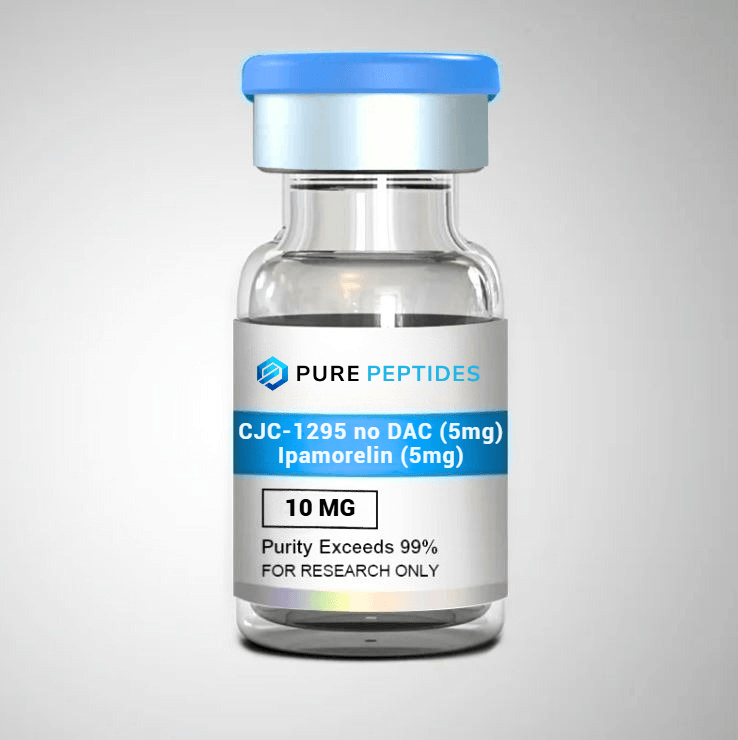
CJC-1295 no DAC + Ipamorelin Blend combines two research peptides: CJC-1295 without DAC (Modified GRF 1-29), a 29-amino-acid GHRH analog, and Ipamorelin, a pentapeptide selective ghrelin mimetic / growth hormone secretagogue (GHS). This blend is widely used in laboratory and preclinical research as a model system to investigate synergistic stimulation of pulsatile growth hormone (GH) release, IGF-1 regulation, anabolic signaling, and related endocrine pathways in various in vitro and animal model systems.
Research Applications (Observational Data from Published Studies) The following points summarize observations reported in scientific literature (predominantly preclinical rodent and porcine models; limited early-phase human data on the individual peptides only) and are provided solely for informational and research-planning purposes:
- Growth Hormone Secretion and Synergy Research: In rat, porcine, and healthy human volunteer studies using the individual peptides or similar GHRH+GHS combinations, co-administration produced markedly higher and more frequent GH pulses (up to 10–20-fold amplitude increase) and sustained IGF-1 elevation compared to either peptide alone, while preserving natural pulsatility and minimizing cortisol/prolactin release.
- Muscle Growth and Protein Synthesis Models: In hypophysectomized rats, aged rodents, and exercise-induced muscle damage models, the GHRH+GHS combination significantly increased lean body mass, muscle fiber hypertrophy, satellite cell proliferation, and nitrogen retention without the side effects observed with continuous GH infusion.
- Fat Metabolism and Body Composition Studies: In obese Zucker rats and diet-induced obese rodent models, the blend dramatically enhanced lipolysis, reduced visceral and subcutaneous fat mass, improved insulin sensitivity, and shifted energy utilization toward fat oxidation.
- Bone Density and Metabolic Health Research: In ovariectomized rat osteoporosis models and GH-deficient animals, repeated dosing increased bone formation markers (osteocalcin, P1NP), trabecular bone volume, and biomechanical strength while supporting overall metabolic efficiency and anti-catabolic effects.
Important Legal Disclaimer For laboratory research use only. Not for human or veterinary use. Not for diagnostic, therapeutic, cosmetic, or food purposes. Not approved by the FDA or any regulatory agency. Researchers are responsible for compliance with all applicable laws and institutional guidelines.
Chemical Information
CJC-1295 no DAC Component
- Sequence: Tyr-D-Ala-Asp-Ala-Ile-Phe-Thr-Gln-Ser-Tyr-Arg-Lys-Val-Leu-Ala-Gln-Leu-Ser-Ala-Arg-Lys-Leu-Leu-Gln-Asp-Ile-Leu-Ser-Arg-NH₂
- Common Name: CJC-1295 without DAC, Mod GRF 1-29
- Molecular Formula: C₁₅₂H₂₅₂N₄₄O₄₂
- Molecular Weight: 3367.97 g/mol (free base)
- CAS Number: 863288-34-0
- PubChem CID: 91976842
Ipamorelin Component
- Sequence: Aib-His-D-2-Nal-D-Phe-Lys-NH₂
- Common Name: Ipamorelin, NNC 26-0161
- Molecular Formula: C₃₈H₄₉N₉O₅
- Molecular Weight: 711.86 g/mol
- CAS Number: 170851-70-4
- PubChem CID: 9831659 (often listed as 9831659)
Loading...