

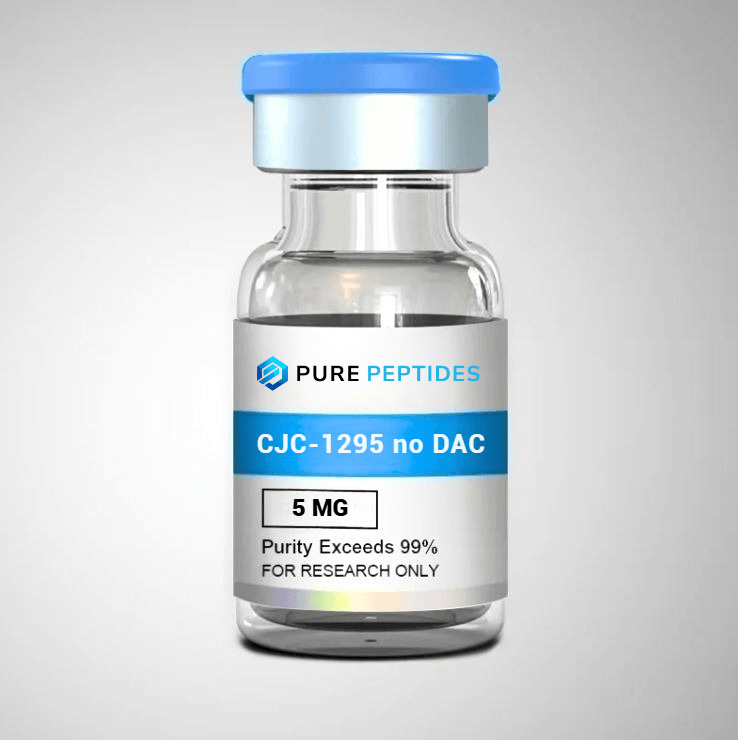
Overview
CJC-1295 no DAC, also known as Mod GRF 1-29, is a synthetic 29-amino-acid peptide analog of growth hormone-releasing hormone (GHRH) incorporating four strategic substitutions (D-Ala², Gln⁸, Ala¹⁵, Leu²⁷) to enhance stability and receptor binding. Lacking the Drug Affinity Complex, it exhibits a short biological half-life (~6–8 minutes in humans), enabling pulsatile GH release that closely mimics physiological patterns. It is widely used in laboratory and preclinical research as a model compound to investigate GHRH receptor signaling, growth hormone pulsatility, IGF-1 regulation, and downstream anabolic/catabolic pathways in various in vitro and animal model systems.
Research Applications (Observational Data from Published Studies) The following points summarize observations reported in scientific literature from preclinical (in vitro/animal) and early-phase human studies and are provided solely for informational and research-planning purposes:
- Growth Hormone Secretion and Pulsatility Research: In rat, porcine, and healthy human volunteer studies, CJC-1295 no DAC administration produced rapid, dose-dependent increases in GH pulse amplitude (up to 2–10-fold over baseline pulses) and IGF-1 levels for 6–14 days post single dose, with preserved natural pulsatile secretion pattern due to its short half-life.
- Muscle Growth and Protein Synthesis Models: In hypophysectomized rats, aged rodents, and resistance-trained animal models, repeated dosing elevated circulating IGF-1, increased muscle fiber cross-sectional area, enhanced satellite cell activation, and improved nitrogen retention without inducing acromegaly-like side effects seen with continuous GH elevation.
- Fat Metabolism and Body Composition Studies: In obese Zucker rats and diet-induced obese rodent models, CJC-1295 no DAC significantly reduced visceral and subcutaneous fat mass, increased lipolysis, and improved insulin sensitivity secondary to elevated GH pulses.
- Bone Density and Remodeling Research: In ovariectomized rat models of osteoporosis and growth hormone-deficient animals, administration increased bone formation markers (osteocalcin, P1NP), improved trabecular bone volume, and enhanced biomechanical strength via IGF-1-mediated osteoblast stimulation.
Important Legal Disclaimer For laboratory research use only. Not for human or veterinary use. Not for diagnostic, therapeutic, cosmetic, or food purposes. Not approved by the FDA or any regulatory agency. Researchers are responsible for compliance with all applicable laws and institutional guidelines.
Chemical Information
- Sequence: Tyr-D-Ala-Asp-Ala-Ile-Phe-Thr-Gln-Ser-Tyr-Arg-Lys-Val-Leu-Ala-Gln-Leu-Ser-Ala-Arg-Lys-Leu-Leu-Gln-Asp-Ile-Leu-Ser-Arg-NH₂ (amidated C-terminus)
- Common Name: CJC-1295 without DAC, Modified GRF 1-29, Mod GRF 1-29
- Molecular Formula: C₁₅₂H₂₅₂N₄₄O₄₂
- Molecular Weight: 3367.97 g/mol (free base); 3641.90 g/mol (acetate salt, commonly supplied form)
- CAS Number: 863288-34-0
- PubChem CID: 91976842
Loading...