

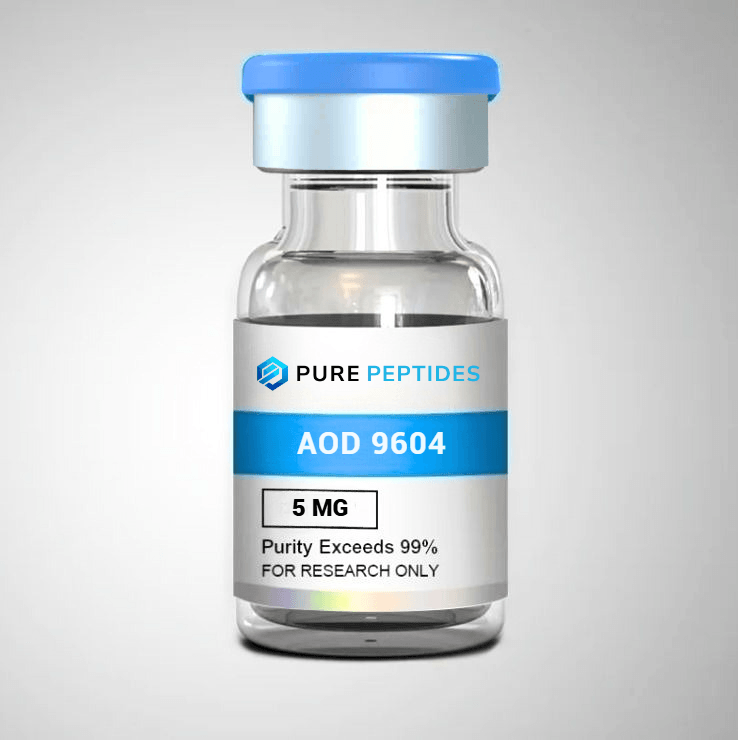
Overview
AOD 9604 is a synthetic 15-amino-acid peptide fragment corresponding to the C-terminal region (residues 177–191) of human growth hormone (hGH), modified with a tyrosine at the N-terminus and containing a disulfide bridge. It retains the lipolytic activity of hGH while lacking growth-promoting effects. It is widely used in laboratory and preclinical research as a model compound to investigate lipolysis, inhibition of lipogenesis, adipose tissue metabolism, and related pathways in various in vitro and animal model systems.
Research Applications (Observational Data from Published Studies) The following points summarize observations reported in scientific literature from preclinical (in vitro/animal) and human clinical trials and are provided solely for informational and research-planning purposes:
- Fat Metabolism and Weight Loss Research: In obese Zucker rats, ob/ob mice, and diet-induced obese rodent models, AOD 9604 administration significantly stimulated lipolysis, inhibited lipogenesis, reduced body fat mass (up to ~30% reduction in some studies), and decreased visceral adiposity without altering IGF-1 levels or inducing hyperglycemia.
- Metabolic Health Models: In rodent models of insulin resistance and early human Phase II trials, AOD 9604 improved insulin sensitivity, increased energy expenditure, and reduced hyperinsulinemia while having no significant effect on blood glucose or growth hormone axis parameters.
- Anti-Inflammatory and Adipose Tissue Research: In cell culture (3T3-L1 adipocytes) and obese animal models, AOD 9604 reduced expression of pro-inflammatory cytokines (TNF-α, IL-6) in white adipose tissue and exhibited mild anti-inflammatory effects linked to decreased macrophage infiltration.
- Cartilage and Joint Repair Studies: In rabbit and rat models of osteoarthritis and in vitro chondrocyte cultures, AOD 9604 (often in combination with hyaluronic acid) promoted cartilage regeneration, increased proteoglycan synthesis, and showed potential disease-modifying effects in joint degeneration models.
Important Legal Disclaimer For laboratory research use only. Not for human or veterinary use. Not for diagnostic, therapeutic, cosmetic, or food purposes. Not approved by the FDA or any regulatory agency. Researchers are responsible for compliance with all applicable laws and institutional guidelines.
Chemical Information
- Sequence: Tyr-Leu-Arg-Ile-Val-Gln-Cys-Arg-Ser-Val-Glu-Gly-Ser-Cys-Gly-Phe (disulfide bridge: Cys7–Cys15)
- Common Name: AOD-9604, AOD9604, hGH 177-191 (modified)
- Molecular Formula: C₇₈H₁₂₃N₂₃O₂₃S₂
- Molecular Weight: 1815.08 g/mol
- CAS Number: 221231-10-3
- PubChem CID: 16131447
Loading...